














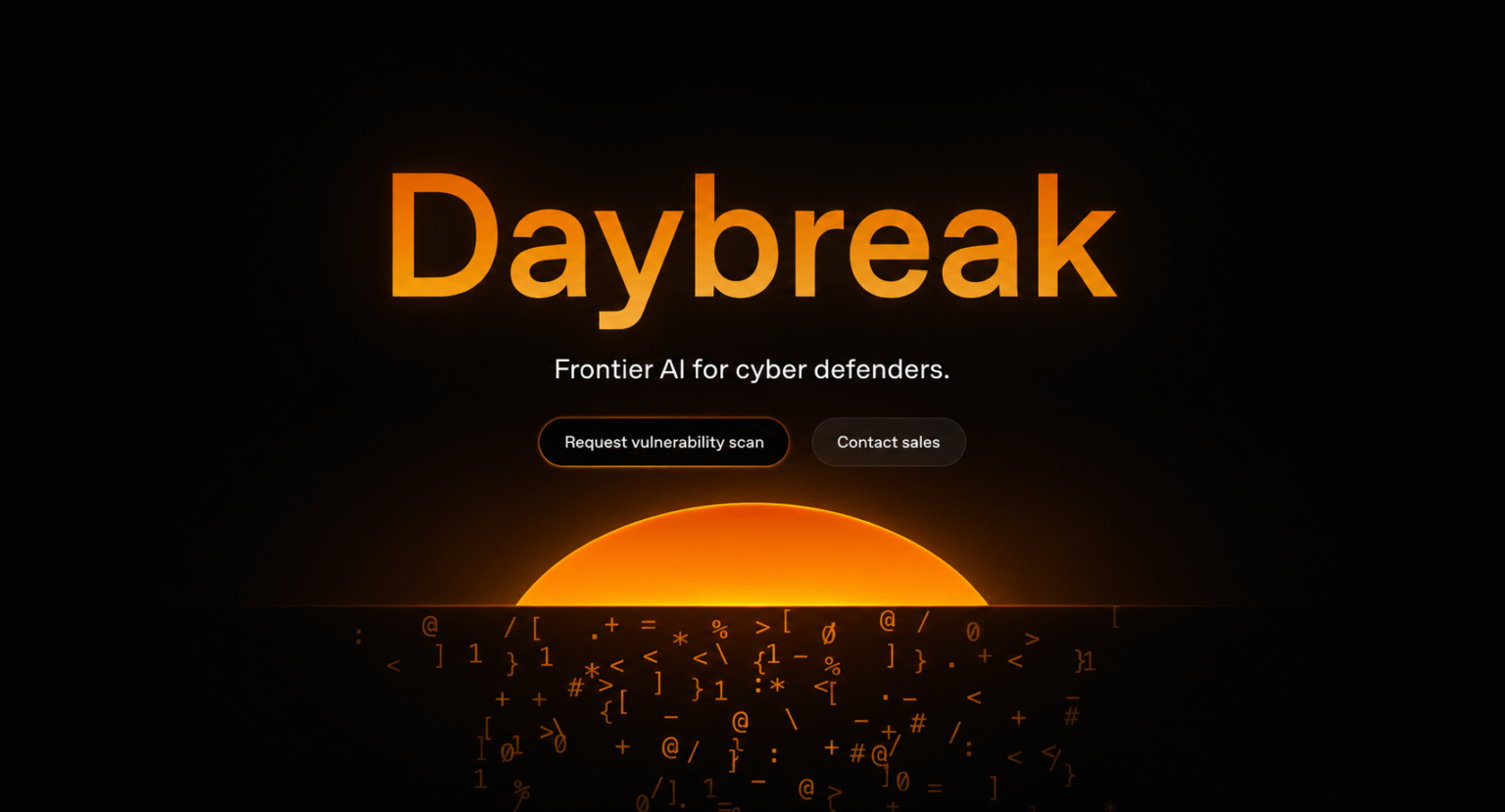
Ezyplugion – In an ambitious move to reshape the digital defense landscape, OpenAI has officially launched Daybreak, a revolutionary cybersecurity program rooted in the philosophy that software vulnerabilities are best prevented during the development phase rather than hunted down after the fact.
According to the company’s official blog, Daybreak is designed to help organizations “see risks earlier and act faster,” with the ultimate goal of ensuring software is resilient from its very inception before ever reaching a production environment.
The Engine Room: Codex Security and GPT-5.5
The Daybreak program is built upon the foundation of Codex Security, which was released as a research preview in March. This tool functions by first building a comprehensive threat model of a specific system—mapping its functions, identifying trusted boundaries, and pinpointing weak spots.
OpenAI is making three advanced models available through this initiative:
GPT-5.5
GPT-5.5 with Trusted Access for Cyber
GPT-5.5-Cyber
These models cover a vast spectrum of defensive tasks, including secure code reviews, malware analysis, vulnerability triage, and automated red teaming. OpenAI CEO Sam Altman underscored the importance of this tech on X (formerly Twitter) on May 12, 2026, stating: “AI is already good and going to get great at cybersecurity; we want to start working with as many companies as possible now.”
Open Access vs. Anthropic’s Restricted Approach
The launch of Daybreak stands in stark contrast to the strategy employed by competitor Anthropic. Just weeks prior, Anthropic introduced Claude Mythos Preview and Project Glasswing but chose to restrict access to a small group of verified partners due to concerns over the models’ potent capabilities.
OpenAI, however, has opted for a more transparent route. Daybreak is accessible to any organization that completes a contact form on the OpenAI website, offering two paths: a “Daybreak Assessment” (vulnerability scan) or direct contact with the sales team. This open approach follows reports from Axios suggesting the project was initially intended to be a private, partner-only endeavor.
Industry Reaction: Revolution or Risk?
Experts view Daybreak with a mixture of optimism and caution. Petros Efstathopoulos, VP of Research at RSAC, noted that integrating such tools into CI/CD pipelines represents a fundamental shift in how development teams approach security.
However, Jen Easterly, CEO of RSAC, offered a sobering perspective:
“We must realize that these increasingly powerful cutting-edge cyber capabilities could create major disruptions in the short term if we are unable to effectively coordinate their deployment and implementation.”
Dev Rishi, GM of AI at Rubrik, highlighted that the rivalry between OpenAI and Anthropic is compressing technology timelines—bringing capabilities expected in five years to fruition in mere months. Meanwhile, Daniel Schiappa of Arctic Wolf warned that while Daybreak secures code, it is not a “silver bullet.” He reminded the industry that credential theft, social engineering, and identity abuse remain primary attack vectors that still require continuous monitoring and human expertise.
With the rollout of Daybreak, OpenAI is not just launching a product; it is challenging the global tech industry to adopt a “secure-by-design” standard in an increasingly volatile digital world.