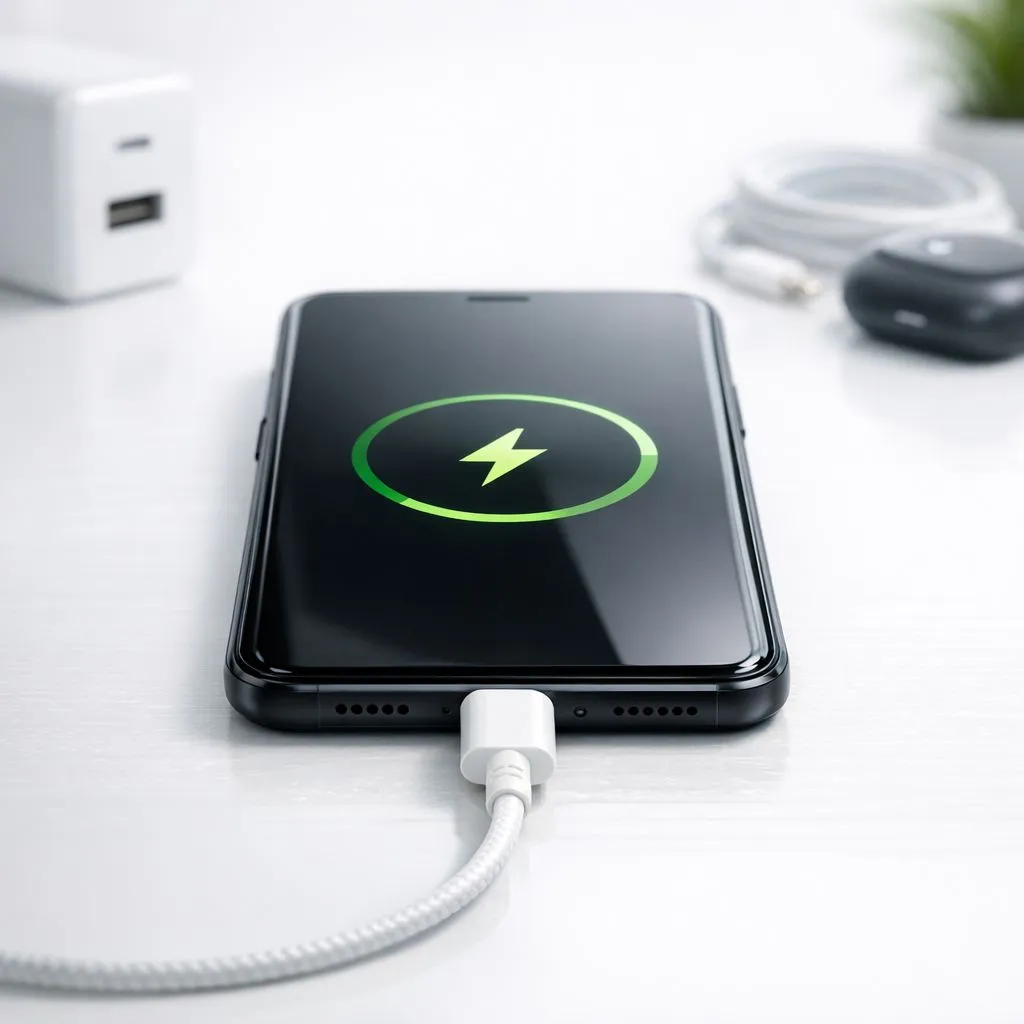
Slow charging is often immediately attributed to the battery or adapter. However, in many cases, the charging cable is the primary culprit. While it may seem simple, the cable plays a significant role in determining how quickly power flows to your phone.
Here are seven common causes that often go unnoticed.
1. Worn or Damaged Cable
Cables that are frequently bent, pulled, or kinked can experience internal damage. Even if the outside looks normal, the electrical pathways inside can be disrupted.
As a result, the electric current doesn’t flow optimally and charging becomes slow.
2. Low-Quality Cable
Not all cables are created equal. Cheap or non-original cables often don’t support fast charging standards.
These cables usually:
- Use poorer conductor materials
- Lack safety certification
- Limit the current flowing to the device
3. Don’t Support Fast Charging
Some cables are only designed for standard charging. If you use a fast charging adapter but the cable doesn’t support it, your speed will still be limited.
- Old USB-A to USB-C
- Cables without Power Delivery (PD) support
4. Cable Length Too Extreme
A cable that is too long can cause power loss due to increased resistance. The longer the cable, the greater the resistance to electric current.
That’s why shorter cables are usually more efficient for fast charging.
5. Dirty or Loose Connectors
Dust, dirt, or rust on the connector tip can impede the flow of electricity. Additionally, loose connectors make the connection unstable.
Symptoms:
- Charging is intermittent
- Needs to be moved to charge
- Charging time becomes longer
6. Cable Doesn’t Meet Power Standards
Some cables have a certain maximum power (wattage) limit. If you use a high-power charger but the cable doesn’t support it, the system will automatically reduce the power.
Example:
- A 65W charger used with a 10W cable
- The result is still slow
- 7. Counterfeit or Uncertified Cables
Counterfeit cables not only slow down charging but also risk damaging the device. Products without certification usually lack overcurrent protection.
In the long run, this can impact battery health.
Slow charging problems don’t always stem from the phone or adapter. A seemingly trivial cable is often the root cause.
If charging feels slow, check:
- The physical condition of the cable
- Fast charging support
- Power compatibility with the adapter
Replacing the cable with a better quality one is often the simplest—and most effective—solution.