
















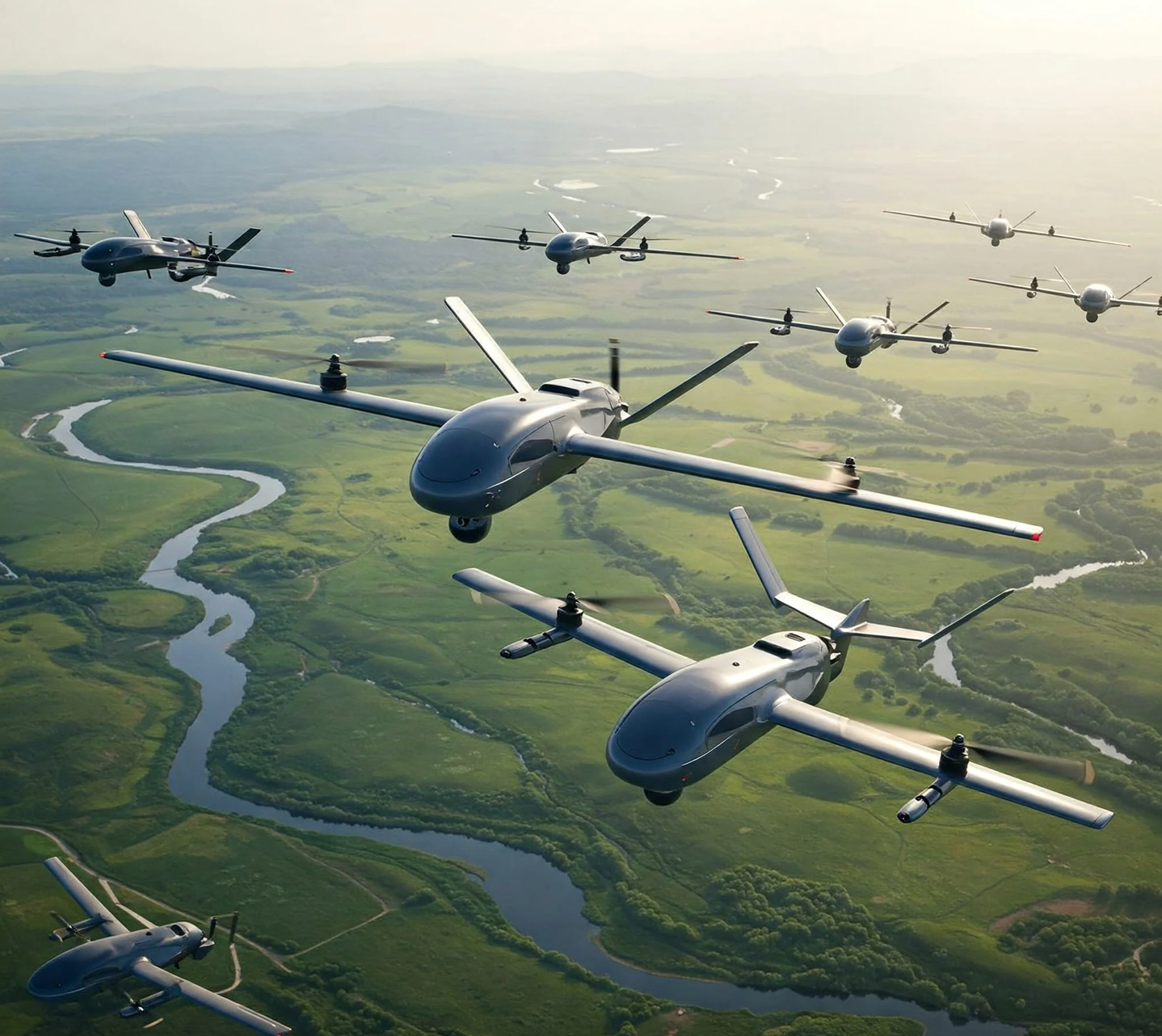
Ezyplugion.com – The landscape of global defense and modern warfare has undergone a massive transformation over the last two decades. At the center of this shift is the rapid evolution of Unmanned Aerial Vehicles (UAVs), commonly known as military drones. What was once experimental technology used strictly for surveillance has now become the backbone of modern military strategy.
Whether you are a defense tech enthusiast or just keeping up with global technology news, understanding the development of combat drones is crucial. Let’s explore how military drone technology has evolved and look at some essential tech insights into the future of automated warfare.
1. The Early Days: The Eyes in the Sky
In their early iterations during the late 20th century, military drones were primarily used for Intelligence, Surveillance, and Reconnaissance (ISR).
- The Predator Era: The introduction of the MQ-1 Predator in the 1990s revolutionized reconnaissance. It allowed military commanders to keep a constant “eye in the sky” over hostile territories for hours without putting human pilots at risk.
- Real-Time Data: The biggest technological leap during this era was the ability to beam high-resolution, real-time video feeds via satellite back to command centers halfway across the globe.
2. The Shift to Combat: Armed UAVs
The early 2000s marked a controversial but highly impactful technological leap: strapping precision-guided munitions to surveillance drones.
- The MQ-9 Reaper: Larger, faster, and capable of carrying a significant payload of Hellfire missiles, the Reaper transformed drones from passive observers into active, lethal combatants.
- Precision and Persistence: Drones can loiter over a target area for over 24 hours, waiting for the perfect moment to execute a precision strike. This minimized collateral damage compared to traditional carpet bombing and fundamentally changed counter-terrorism operations.
3. The Modern Era: Kamikaze Drones and AI
Today, the technology has advanced far beyond remote-controlled planes. We are entering the era of AI-driven, autonomous, and cost-effective drone warfare.
- Loitering Munitions: Often called “kamikaze drones” (like the Switchblade or Shahed), these are hybrid weapons. They act as both a surveillance drone and a missile, loitering in the air until they identify a target and then crashing into it to detonate.
- Drone Swarms: Enabled by Artificial Intelligence, militaries are testing “swarms”—dozens or hundreds of small, cheap drones communicating with each other to overwhelm enemy air defenses simultaneously.
Essential Tech Insights: Drone Defense and Cybersecurity
As drone technology advances, so does the technology designed to stop them. Here are key insights and tips on how defense tech is adapting to the drone threat:
Tip 1: Understanding C-UAS (Counter-UAS) Technology
You cannot shoot down a swarm of cheap drones with expensive million-dollar missiles; the economics don’t work. Modern defense focuses on C-UAS (Counter-Unmanned Aircraft Systems). Look out for developments in Directed Energy Weapons (DEWs), such as high-energy lasers or microwave weapons, which can fry drone electronics instantly and cost pennies per shot.
Tip 2: The Importance of Signal Jamming
The most effective way to defeat a drone is to sever its connection to its operator. Electronic Warfare (EW) uses signal jammers to disrupt the GPS and radio frequencies drones rely on. A jammed drone will either crash, land safely, or return to its origin point.
Tip 3: Cybersecurity and “Spoofing”
Modern military drones are flying computers, making them vulnerable to cyberattacks. “Spoofing” is a hacking technique where a defender feeds fake GPS coordinates to a drone, tricking its navigation system and essentially hijacking it. For defense contractors, end-to-end encryption and anti-spoofing algorithms are now just as important as the drone’s physical armor.
Conclusion
The evolution of military drones is a testament to how rapidly technology can alter global security dynamics. From basic remote-controlled cameras to AI-powered autonomous swarms, UAVs have permanently changed the rules of engagement. As we look to the future, the ongoing tech race won’t just be about building better drones, but also about mastering the cybersecurity and electronic warfare needed to control the skies.