













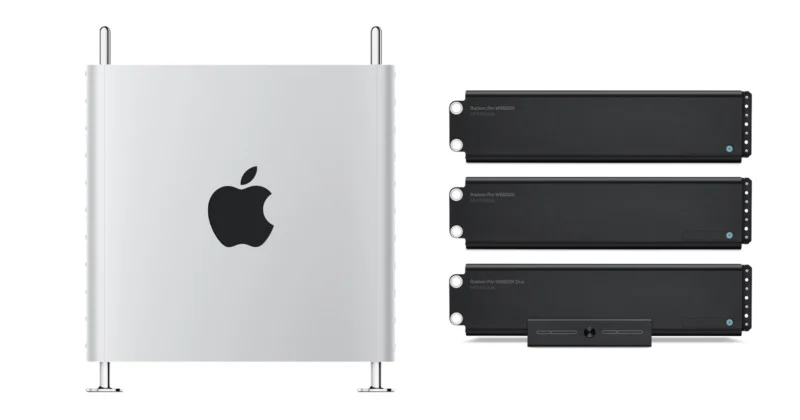
Apple has reopened the possibility of using eGPUs (external GPUs) on Apple Silicon-based devices, but with a very limited approach. The company has reportedly signed a third-party driver that allows AMD and Nvidia graphics cards to be used through the eGPU. While promising, this support isn’t intended to improve graphics as previously, but rather focuses on the needs of artificial intelligence (AI) research.
Apple previously supported AMD-based eGPUs through Thunderbolt since 2016, providing a practical solution for improving MacBook graphics performance. However, support for Nvidia has long been limited, and has become even more restricted since the transition to Apple Silicon. Now, through partnerships with third parties like Tiny Corp, Apple is providing limited access to external GPUs—specifically for AI processing.
Technical Support and Usage Restrictions
This driver allows users to connect AMD RDNA3+ or Nvidia Ampere+ GPUs through an eGPU enclosure based on Thunderbolt 3, USB4, or later. The minimum system requirements are macOS 12.1, along with a device with sufficient port support and a power supply to drive an external GPU.
The installation process is done through the TinyGPU.app application, which will install the driver and prompt users to enable extensions in system settings. After that, configuration varies depending on the type of GPU used—AMD tends to be simpler, while Nvidia requires add-ons like Docker Desktop to run AI models.
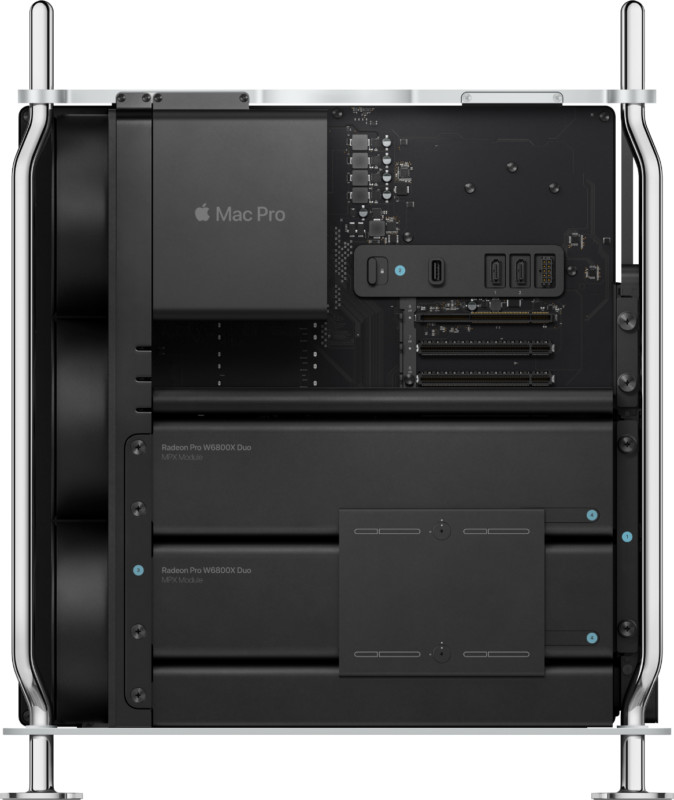
However, there’s a key limitation to note: this eGPU cannot be used to accelerate graphics output to an external monitor. This means users won’t experience the visual performance boost seen with eGPUs on Intel-based Macs in the past.
Focused on AI Research, Not General Users
This driver is intended for very specific needs: AI processing and machine learning. While Apple already equips its devices with powerful internal GPUs and a Neural Engine, using an external GPU provides researchers with an alternative for running larger or more complex AI models.
This support allows researchers to harness the power of external GPUs, which may be more efficient or powerful than Apple’s built-in GPUs. Furthermore, Apple’s move to sign this driver also improves security, as users no longer need to disable System Integrity Protection (SIP) as before.
While this decision doesn’t provide a flexible eGPU solution for all needs, it’s still a step forward. Apple hasn’t fully opened its ecosystem to external GPUs, but it’s at least now creating space for development and experimentation in the growing field of AI.